Showing posts with label war. Show all posts

Thursday, January 4, 2024

A Brief Sketch of History: Subdivisions of the Iron Age

Large sedentary civilizations emerged where groups of people were forced to, and then rewarded by, central organization of labor - often in marginal environments (dry river valleys requiring irrigation, or in the special case that generalizes the rule, rice farming.) Because of the more rapid diffusion of ideas, the Silk Road regions (Asia, Middle East, Europe, North Africa) were advantaged over the rest of the world. (Hence, the description here is focused on the Silk Road macro-region.) Europe, in turn, was advantaged over China because geography predisposed the formation of multiple small states which acted like incubators for cultural selection; and Greece was advantaged over the rest of Europe given its peninsulas, mountains, and islands. This arrangement still allowed eventual cultural diffusion, overtaking China only with the printing press. The other factor which allowed Europe's situation to obtain was the separation of religious/moral authority and secular authority - a Pope, and kings (as opposed to the unity of these institutions throughout much of Islamic history, and the relative marginalization of religion in East Asian history.)

States demonstrate a natural cycle of 200-250 years. Even if a nation by the same name, on the same territory, with the same people, lasts longer than this, typically there is a transition period. The natural experiment of a large state on a fertile plain showing this pattern is China, but Rome also demonstrated the Principate and Dominate periods, the Ottomans had a similar pattern, and it can be seen elsewhere as well. In these rough divisions I am focusing on the Silk Road regions of the Old World - China, the Middle East, North Africa and and Europe.


THE IRON AGE: 1200 BCE-1800 CE

Early Iron Age: 1200 BCE-500 CE. Began in Europe with the Bronze Age Collapse, saw the rise of multiethnic administrative empires and coinage, and thus the Axial Age. In China, this contains the end of the Shang Dynasty, as well as the rise and fall of the Zhou and Han Dynasties. In Europe this can be further divided into Early Iron Age 1 (1200-600 BCE) featuring palace economies, and Early Iron Age 2 with the later development of oligarchic rule and early market economies.

Middle Iron Age: 500-1500 CE. Roughly co-extensive with the medieval period. in Europe this begins with collapse of Western Roman Empire, the weakening of the Eastern Roman Empire, the collapse of Persia and the spread of Islam. In China, it begins earlier with the end of the Han Dynasty. The Middle Iron Age is characterized by the spread of supra-ethnic philosophies and the dissolution of large empires, which can be thought of as an ecological model of cooperation within empires no longer exceeding competition within empires; oligarchies quarelled amongst themselves, and social or ethnic outsider groups benefiting from cultural diffusion (Germanic tribes in Europe, or the Yellow Turban Rebellion in China.) This period is marked by states and peoples developing a sense of identity if not patriotism, and especially by nomads occasionally overwhelming established states, with the Mongols as the military high water mark of nomads in history, with their decline signaling the end of this period.

Late Iron Age: 1500-1800 CE. In the West this contains the Renaissance, Protestant Reformation, Age of Discovery and Enlightenment. In Russia, it starts with the Great Stand on the Ugra and eastward expansion. In China, it's the parallel end of the Yuan Dyansty. Ultimately it begins with the spread of gunpowder, as seen in the gunpowder kingdoms, as well as the printing press, which had its greatest impact in Europe both for the good (Europe's domination of the world starting in this period) and the bad (religious civil wars as Northern Europe could communicate more easily.) At this time, the technological advantage of sedentary societies began to overwhelm that of nomads. Simultaneously, the benefit of technological innovation in the crucible of a sort of geographically-enforced natural federalism in Europe allowed Europe to outstrip China and colonize the world. The use of gunpowder as a source of energy more powerful than human or animal muscle anticipates the Industrial Age. Like the Mongols, Napoleon was the high water mark of Iron Age warfare, and was ultimately undone by the home of the Industrial Age, the United Kingdom.


Though not the focus of the post, the Industrial Age comes with its own subdivisions: the first wave in 1790-1830 with steam and water power leading to factories, materials extraction and textiles, an interim with three "transition wars" in the West (the Crimean War, American Civil War, and Franco-Prussian War; the Taiping Rebellion still appeared very much like a late Iron Age religious War, like a Thirty Years War compressed into half the time) with the second industrial revolution 1870-1910 converting industrial power into consumer goods; this culminated in World War I, the first industrialized war.

Sunday, August 6, 2017

Defense Contractors - Is War Profitable?

Companies like Boeing get some of the revenue from selling consumer (civilian) hardware, and some from defense. Other companies are far more dedicated to producing military hardware (north of 90% of their sales in some cases.) Of the top 10 defense contractors in the world per Wikipedia, I looked only at the 7 U.S. ones that would exist in a similar tax and regulatory environment. The correlation is that the more arms sales, the less revenue.

So why be a defense contractor then? What often matters more is measures of unit profitability (indices like EPS, P:E - or if you're an employee, profitability per employee.) And sure enough, excluding outlier L3, the more military business, the more profitable per employee.

Tuesday, July 25, 2017

War Requires Material Capacity and Lack of Institutional Constraint

In Never at War, Spencer Weart shows that in the modern era, democracies are extremely unlikely to fight other democracies, but that non-democracies fight democracies, and each other, much more often. You can try to think of counterexamples (Mexican-American War, maybe) but you'll be straining to do so.

A new paper by Blank, Dincecco and Zhukov show that prior to the modern era (i.e., 1200-1800) parliamentary states were actually MORE likely to go to war than absolutist states were. Their argument is that parliamentary states were successful in that they actually had more capacity to make war than the absolutist states, but they had not yet developed institutional constraints to prevent them from doing so, as presumably occurred in the modern era. (H/T slatestarcodex)

Thursday, March 30, 2017

Predictions from the Clash of Civilizations: and Let's Start Promoting Liberal Democracy


Aside from the lesson contained in its title, Samuel Huntington makes the worrisome (and probably true) prediction that religion will re-emerge as an important force in international politics in the near future.*

The book is very much a product of its decade - written by an older American scholar in the 1990s,** immediately after the end of the Cold War - and contains frankly superficial compilations of historical and cultural detail.  But he does give several supporting arguments for his thesis, all of them relating to two observations:  modern states engage in wars for the people, not wars for kings; and that religion is one of the central defining characteristics of civilizations and therefore of individuals' identities.  As history has progressed, civilizations are in contact with their neighbors more and more - and the human tendency to define oneself in opposition to the Other comes forward.  We've gone from occasional trade caravans received only in royal palaces and seen by few, to universal social media - before, the Other was a rumor.  Now, the Other is constantly in your face (even if it's a domestic Other - more on this later) and social media has produced a status monoculture.  This gives rise to the idea captured in the book's title and in particular bloody border of Islam that is the best-known takeaway from this book.  It's worth stressing that he wrote this book five years before September 11th.

But Huntington's argument would seem to apply to domestic politics just as well.  Many Americans seem not to know what their political values are, other than if it pisses off the opposition, it must be good.  And when the opposition has built a system that seems rigged for them to succeed, exalts their status, and denigrates yours, your identity (and your ability to define it against the Others) is in crisis.  At civilizational borders you can just do your best to avoid the Others, but if you're in the same country there is no such strategy.  Brexit and the election of Trump may both have been driven in part by basic threats to identity, exacerbated by class boundaries that are causing a realignment in the liberal and conservative parties on both sides of the Atlantic.

How so?  Both of these stories are about a revolt by socially conservative, poor, ethnic-majority people living outside the successful metropolitan centers, against the professionals in those metropolitan centers who have run the show.  (This is what exposes the cracks in both the liberal and conservative coalitions; see #4 here.)  Professionals define themselves by their profession and the abstract principles that enable their profession (globalism prominent among them).  In the 21st century, that's a winning strategy.  But the concrete thinking authority-fearing folks in the interior who just want to raise a family and enjoy country life?   They're no longer safe from the reach of international competition.  They used to be comfortable, not constantly aware that a world existed beyond their communities, and they identified strongly with those communities.  Maybe they weren't rich, but they knew who they were, and if anyone looked down on them, at least they weren't constantly reminded of it.

But now after we've seemingly finished cognitively sorting ourselves geographically, the people in San Francisco and London are unambiguously more materially successful, all the while demonstrating what looks to the folks back home like flagrant disloyalty to the homeland and (even worse!) looking down on (insert rural province here) because of their loyalty and respect for authority. From the Trump/Brexit crowd's perspective, the status monoculture is inescapable, and it's upside-down, with them at the bottom.  Whether or not the provincial folk were starting the next Google, what was important was raising a good family in their town and being considered good folk by the people they knew.  Now that's being taken away, with all the psychological impact of loss of meaning you might expect (e.g. chronic unemployment and the opioid epidemic).  Another telltale of how the modern classes define themselves is the effect one's class has on ethnicity.  The salience of ethnicity decreases among professionals, and increases among the loyalist left-behinds.  (In the U.S., witness the high rate of interracial marriage among physicians and engineers; and in fact, white-Asian marriages produce wealthier households than either Asian-Asian or white-white.)

Huntington notes that the last four centuries of Western history are the exception to the rule,*** as Western civilization spread around the globe mostly without a religious motivation at the center of its motives - thanks to the Treaty of Westphalia, which, maybe not coincidentally, has come in for rough treatment recently from the alt-right.  But it's probably not a coincidence that this vacuum was eventually filled with political philosophies.  The ideas of democracy have been carried (imperfectly) at the head of the most successful empires of the day, and needed no marketing.  But as the Rise of the Rest continues, the values of liberal democracy and reason may need some slick PR and catch phrases, otherwise we may regress to the historical mean.  What would the beginning of Huntington's era of future civilizational religious struggle look like?  One aspect would be a drop in the global status of liberal democracy, very similar to what we've observed in the last few years with the rise of China, Brexit, and the election of Trump.


*Hitchens was more specific on the re-emergence of religion as a driver of geopolitics, and poignant for us in 2017.  Shortly before his death:  "We will live to regret conversion of Russia into a heavily-armed, self-pitying, chauvinistic theocracy."

**As an example of a 1990s-ism in this book:  the Chechen conflict has a prominent place.  Then again even the clearer-thinking Peter Turchin suffered from this myopia a bit when in the 1990s he predicted the rise of an Islamic Chechen state.

***Huntington does overstate the exceptionalism of Europe's nonreligiousness, which bears expanding in a footnote.  For one thing, it's interesting that there could even be a Peace of Westphalia, and that a (second!) religious schism was tolerated in Europe.  There is no such equivalent between Sunni and Shi'a who have coexisted in severe tension often erupting into war, almost since the death of Mohammed, and his thoughts on what aspects of Europe or its culture made coexistence possible would be useful.  Second, Europeans certainly were partly motivated by extending Christendom  (applying more to Catholic powers than Protestant, and more earlier than later) and an attempt to reclaim what Christians believed were rightly their own lands (the Crusades, and the Iberian Reconquista, both obvious civilizational conflicts, and the latter of which he gave no attention, even though there are Spain-Morocco tensions to this day.)  Third, he rightly observes the bizarre coincidence that Europe didn't originate its own religion and today practices a Middle Eastern one, but leaves out the observation that Buddha was blue-eyed Indo-European whose religion spread to East Asia and is nearly absent from the land of his birth.  Huntington somehow concludes by stating that Europe is the exception to history's rule for not originating a religion that it then evangelized to the rest of the world, but really there have been only three successful evangelical religions (Christianity, Buddhism and Islam), only one of which began and obtained political power in the region of its birth (Islam).  It's actually Islam and the Islamic world which are the exception.  As Islam can be thought of as Abrahamism v3.0 (Christianity is the earlier version), from an evolutionary standpoint we would expect it to have to be more virulent and power-seeking to surpass its antecedents.  The obviousness of the replacement of religion in later Western expansion with political philosophies seems to need little comment.

Tuesday, April 5, 2016

What Are the Things That Could Derail the Improvement of Life on Earth?

We assume that wealth will grow, violence will decrease, and in general life will get better for life on Earth, if only things keep going roughly as they are now. What might happen to interrupt this process?

On a Timescale of Minutes to Years:

1. Weapons of mass destruction/acute ecocide. This breaks down into three categories:

a) nukes: there are a lot of them left. This one is frustrating because it's still an existential threat but it's been around for a long time, so people have become used to it.

Once one is is used deliberately or even explodes by accident, the taboo is broken, and more will follow in much shorter order than the interval between that event and Nagasaki.

b) any other such weapons, especially biological weapons.

c) The Singularity. Superhuman general artificial intelligence would still not necessarily be intelligent enough to be evolutionarily stable, and instead of a blossoming of ultra-intelligence, could just result in ultimate ecological castastrophe.

2. Natural events that could destroy parts of the infrastructure the modern economy relies on. Earthquakes weren't a big deal when you could rebuild your bark longhouse in a few annoying hours. Not so San Francisco. 9.0 earthquakes aren't that frequent, but they occur. Similarly, we don't even know how often Carrington-level events happen because until there were electrical lines to be affected, there was no way of knowing and no reason to care. Also related to Carrington events, refer back to item 1a; the result of a nuclear high-altitude EMP would be catastrophic.


Decades to Centuries:

3. Selection against intelligence by economic development, both within and between countries. That is, idiocracy. The most fertile countries are often the most disastrous. Related: the world and technology will not change any slower than they are now (unless one of the disasters in this list occurs) yet there are people (the majority?) who appear constitutionally unable to adapt to this level of change and think in abstract terms. The modern world ironically appears to make these people regress into more and more of a fundamentalist, tribal state where they assume, correctly, that they will not be able to understand the world at all, so they cling to tribal authority.

4. Consumerism and collapse/transparency of status hierarchies, making people unhappy with otherwise stable productive lives.

a) Consumerism: it has been argued that above a certain amount (usually given as US$70,000), gains to income translate increasingly marginally to happiness. However it is increasingly impossible to escape images of houses, mates, experiences that you're not getting even with your $70,000 and your nice home, spouse and vacation. Hence this principle runs up against the human irrationality that we would rather live in a neighborhood of $100k earners and make $120k, then a neighborhood of $200k earners and make $180k.

b) This same media technology also means that increasingly, we are de facto in a world culture where there are few isolated laboratories for meme innovation. In the past, even in neighboring dictatorships, at least the more flawed dictatorship might lose on the battlefield, with the slightly better practices of the other dictatorship winning out. But what will ever fix your shitty institution now? The Mongols aren't about to overrun the DMV for being too slow. Also, increasingly we cannot preserve the independence of our multiple overlapping status hierarchies and "healthily" isolate our social spheres from one another - so your boss, or that girl that was prettier than you in high school, can make fun of your for being the president of a local organization which otherwise would've give you a nice status boost to increase your QOL.


Therefore, to avoid acute events, we should focus on continuing nuclear disarmament, start taking biology more seriously before CRISPR gives us the equivalent to Rosenbergs working with ISIS, and increase focus on AI safety. We should also try to understand how to predict and protect against Carrington solar events and similar century-frequency geological and astrophysical threats.

To avoid the longer-onset ones: no solution here would seem palatable, but otherwise we face death by a thousand cuts. To fix #3, it would seem only eugenics by licensing reproduction would work within a country, but this is abhorrent in Western politics to liberals and conservatives alike. (A certain China does come to mind and they seem to have done "okay", and by "okay" I mean "the greatest developmental triumph in human history". Despite or because of one-child?) There is also the Brave New World style solution of a big reservation or favela for all the people who can't hack it in the future economy, but in Brave New World it was just a few misfits, as opposed to all their Epsilons and Deltas.

For #4, we could adopt cultural norms about media use - while this is already happening to some degree, it takes both personal discipline and is easily eroded by non-cooperators, i.e. your co-worker who you suspect will check their email on the weekend even if they said they wouldn't. Also, solving the "tyranny of territory" would speed the diffusion of good memes, even in a connected mono-culture world. ("Tyranny of territory" is that humans have to live on the surface of the Earth so organizations from families up to government have static boundaries. Charter cities are a nice idea but fall flat as long as they are within territories held by the cartel system of mutually-recognizing violence monopolists, i.e. states. That is, I can't tell my DMV, California, that I choose to use Minnesota's DMV, because at bottom guys with guns will come and make me cooperate.)

Saturday, January 11, 2014

How to Become Dominant During the Twentieth Century


Reproduced from the Economist, originally from Thomas Picketty's Capital in the Twenty-first Century


It is difficult to overstate the geopolitical impact of the destruction of European capital during the World Wars. Note that the graph here is capital as a share of national income. The European countries represented are now back to pre-war levels, and higher than the U.S., but it's the rate of capital loss (and the implied shock) that is most salient.

As with most things, America's narrative of its own success is more complicated than boosters or detractors would claim. One factor that absolutely helped the U.S. surpass its competition was that it is on a separate continent than its competition, so when wars broke out, they flattened each other twice in less than half a century, leaving the U.S. mainland unscathed. (Even Australia came in for worse treatment in the Second World War with repeated Japanese bombing runs on the mainland.) Probably because this was mostly the result of geopolitical good luck rather than any decisions America's leadership made, or America's cultural values or institutions, this part of the narrative is grossly under-emphasized.

Monday, September 24, 2012

Japan 8 Times More Likely to Have Nukes in 2014 Than 2013

At least, that's what the people at Intrade think at the moment. Acquisition by New Years Eve '12-13, 1.5%, and by NYE '13-'14 11.9%.

Intrade has no market for nuclear terrorism events in the U.S., no doubt in part because a prediction market doesn't function when the outcomes in question make the contract unenforceable. That said, most terrorism experts put it at beow 1% over the next decade, athough there is a broad range, and one places it as high as 29%. (Bunn, Matthew. 2006. A Mathematical Model of the Risk of Nuclear Terrorism. Annals of the American Academy of Political and Social Science September: 103-20, and a good summary of multiple opinions here.)

Of the existential risks of liberal democracy, weapons of mass destruction present a less likely but more consequential risk than states' failure to budget sustainably. Whether this reality percolates down from the political heavens to voters that insist on making it a central issue in their political process seems to be, unfortunately, an entirely separate question.

Tuesday, August 28, 2012

Some Problems in Turchin's War and Peace and War

Peter Turchin aims to be the real-life Hari Seldon, so it's admirable he gets the inevitable comparison out of the way early in the work. (If you're not familiar with Turchin and/or Seldon, go here and here respectively.) And the goal is an admirable one: model history mathematically. His arguments center on the consequences of interactions at culture frontiers between empires and their neighbors, on the mechanisms which cause state-decay from within, and on the crucial effect of metaethnic solidarity, which his macrohistorical predecessor Ibn Khaldun called asabiya.

Indeed one of the strongest values of the book for me was the synthesis of the two most famous works of macrohistory, namely Gibbon's Decline and Fall of the Roman Empire and Ibn Khaldun's Prolegomenon.  Turchin summarizes Khaldun as follows:  empires decline, former barbarians on the borders who were forced to organize are more vigorous, and either supplant the empire through conquest or infiltration, or surround and surpass them. Turchin's work can be seen as largely an expansion of Ibn Khaldun's.  Of course viewing the book's main value as an executive summary of a classic isn't necessarily a compliment, and even in Turchin's goals themselves there are issues. First, the fixation with the history of empires (which, granted, is interesting) is different than a focus on human flourishing, which is much more important. To be fair Turchin never implies that this is what he's doing but if you're going to model history, it seems a more worthy goal is a direct focus on happiness than grand sweeping armies.

Second, and I think far more damaging to the value of the book, the point of a model is to predict. Yes, it's interesting if a model that you built based on the Romans and Byzantines fits the Arabs, but the proof of the pudding (and its true value) is in forecasting the future. To this end he makes only two predictions: one, that if the Islamist Chechen incursion into the Russian Caucasus expands, this means the withering of the Russian state and the growth of a new imperial state will grow from the nucleus of the Chechen insurgency; and second, that China and the United States will be competitors in the twenty-first century. I don't think you need to be a macrohistorian to arrive at the second one. As to the first, while I don't take issue with a growing Chechen insurgency damaging the Russian state's legitimacy, I do find it dubious that an Islamic successor state in the Caucasus would be an "empire" or even a functioning state by any means. I refer to Fukuyama's argument that the Islamist movements of the world are desperate rear-guard measures that will have no lasting impact. To be a real state today you need a real economy, with a real, complex, technological industry. That is to say, the Taliban were never in any danger of building an empire in Afghanistan.

This brings up a point which Turchin half-makes, which is that Things Have Changed. He dedicates a chapter to the effect of cell phones, but I think international economic organizations, a world full of clearly defined borders and terrain, widely available media, and wealthy democratic countries dependent on value-adding labor and human capital might behave differently than the island-civilizations he's writing about. Today, there's just no equivalent to Rome and the Germans on the frontier, or Russians and the Mongols. The world is neatly divided up, everybody knows what everyone else is doing, and plunder does not equate to wealth. The Mongols were the last hurrah of the nomads, the last wave of horsemen emerging from central Eurasia, but since the fourteenth century the balance of strength has favored the sedentary since improving technology enables them to accumulate capital (and defenses) more than adequate to repel would-be marauders. (I'm suggesting here in contradiction to Turchin that it wasn't just the Russian frontierspeople's asabiya that helped them drive out the Mongols, it was improved farming and metalworking.) And yes, today there are certainly cultural fault lines revealed by the end of the Cold War, as Turchin alludes to by referencing Huntingdon, but there are no frontiers. This isn't Turchin's fault but the reader can't help but wonder if his theory still applies. If not, then I can continue predicting a dim future for his hypothetical Chechen Caliphate. 

The frontierless world we now occupy does raise the question of what mechanisms of competition, if any, apply to governments. Nation states are effectively a cartel, enabled by force and their monopoly on a finitely divisible resource (land) - this is a staple observation by many libertarian theorists who point out that such arrangements are much less voluntary than most of us would like. That I know of, this problem has not been discussed in the context of a recently frontierless world where there is no "correction" mechanism for weak, badly run states. Before, complacent despots at least feared finding themselves facing an invading horde that overran their badly-guarded borders. I don't favor a return to the system of state-level survival of the fittest - and in any event an enduring state is not necessary a pleasant one to live in - but one can't help but worry that a fickle and irrational electorate is enough to keep a large and complex modern state running well, when said modern state has, literally, nothing to worry about in terms of its continuing survival.  No barbarians are coming, and it can keep muddling along.

One of Turchin's objections to other theories of history and economics is the failure of rationally self-interested models to explain the mass behavior of humans with respect to their meta-ethnic groupings.  His claim is that asabiya would not exist in a rationally optimizing animal. This is flawed on several levels.

The first flaw is that pre-committed solidarity is actually a very powerful and therefore rational strategy - just not over "single-round games" for a single individual. In fact we see it in organisms besides humans (e.g. ants). These strategies rely on a) a pre-committed signal that one is a member of a group and b) behaving differently toward members of said group. (Richard Dawkins referred to this in hypothetical genetic terms as the green beard gene.) The emphasis on pre-commitment in humans is that our behavior is much more plastic. An ant is pre-programmed to attack those with a different scent; humans have more degrees of freedom. Consequently we rely on early life experiences (family and ethnic identification) that we can't choose to opt out of, because there's an emotional response built into us that remains with us for life, like it or not. Individually and in single round games, this behavior seems irrational, but in the aggregate and over indefinite rounds (in the massively multiplayer game of real-life) it's very powerful. Indeed a lot of human behavior that seems irrational in isolation is actually pre-programmed game-theoretic heuristics that make sense over multiple rounds; e.g. that we are willing to punish wrongdoers even when such punishment costs us and doesn't reverse the crime. (The point? Stop future wrongdoers!) The more generalized solution for human behavior is that we maximize utility, which is partly calculated with money, and partly with feeling different degrees of good or bad about helping or hurting human beings that we have varying connections to.

The second flaw is that it's difficult to imagine the motivations of the peasants that Turchin describes as "patriotic" in any sense that we would recognize.  Patriotism is a relatively recent development. A Chinese emperor didn't much care if peasants were patriotic Chinese - and why would an absolute monarch, as most rulers were throughout history, give a damn? What would the peasants do about it?  There are also considerable direct costs to not risking one's life to go to war - censure from neighbors (or outright violence), plus throughout history people were making these decisions based on poor information, plus in the desperate poverty that existed throughout most of history, the chance at plunder or a few dollars from a royal coffer may have been a better bet than staying at home barely subsisting on the feudal lord's land.  All this is to say that the medieval Russian farmers that he focuses on never had a choice to say, "I could peacefully trade with other Russian farmers, or Mongol merchants. I shall choose the Russian farmers out of ethnic solidarity." It was economic reality that drove them. Since Turchin is more realistic about the economic forces that drove change in thirteenth-fourteenth century Europe (climate shfit and plague), you would think he would be less prone to romanticizing. That said, culture does matter - it profoundly affects institutions and delay of gratification, and therefore wealth and happiness. The two options on this question, both unpalatable to the politically correct, are that either culture is pointless noise and mere window-dressing, or it has an impact on material well-being. Russian peasants chose to accumulate agricultural wealth and defend their land while Mongols continued raiding. The farmers' successor state today is much bigger and more successful than the Mongols'. An accumulation of coincidences, or a real trend?

A final shortcoming is that Turchin makes a common mistake by correlating two high-level characteristics of societies by cherry-picking; in this case, that the more central a government a region or state had over time, the less overlapping levels of status and trust there will be and therefore the worse the institutions and economic situation will be. (There are other lines of thought converging on the conclusion that multiple overlapping status hierarchies are good.) Talk about cherry-picking; Turchin refers to a specific book about Italy for this argument. True, people have applied similar arguments to the success of Japan and England (multiple feudal states kept decentralized and weak by a remote-from-the-people monarch intentionally keeping the mid-level nobility weak), and to China vs. Europe - yet is England really that much better off than France as a result? As a "dissident" libertarian, I frequently point out that for markets to work you need some commons, and for that you need some centralized functioning government. Otherwise, Nepal and Somalia would be veritable Galt's Gulch-paradises of innovation and venture capital, and guess what? They're not. What about far eastern Siberia for that matter? People who make the kind of argument Turchin is making (about anything, not just economics) usually respond by saying that you need "just the right amount" of centralization. Which is to say, the amount that England and Japan and Northern Italy have is the right amount because they're all successful, except a) that turns it into a completely atheoretic, circular, empirical argument and b) their centralization is in fact all different.

A final observation: despite taking issue elsewhere, I was very happy to see a historian observing that we should be circumspect in our weighting of Machiavelli's the Prince as either an accurate historical document or an effective political manual, since Machiavelli was after all writing it in exile. Why should we listen to this guy? He was a screw-up!

Thursday, August 25, 2011

El Niño and Wars

El Niño events increase the tendency to go to war. Compare with other work on the rainfall theory of democracy, and the tendency of centralized states to first emerge in marginal rainfall environments.


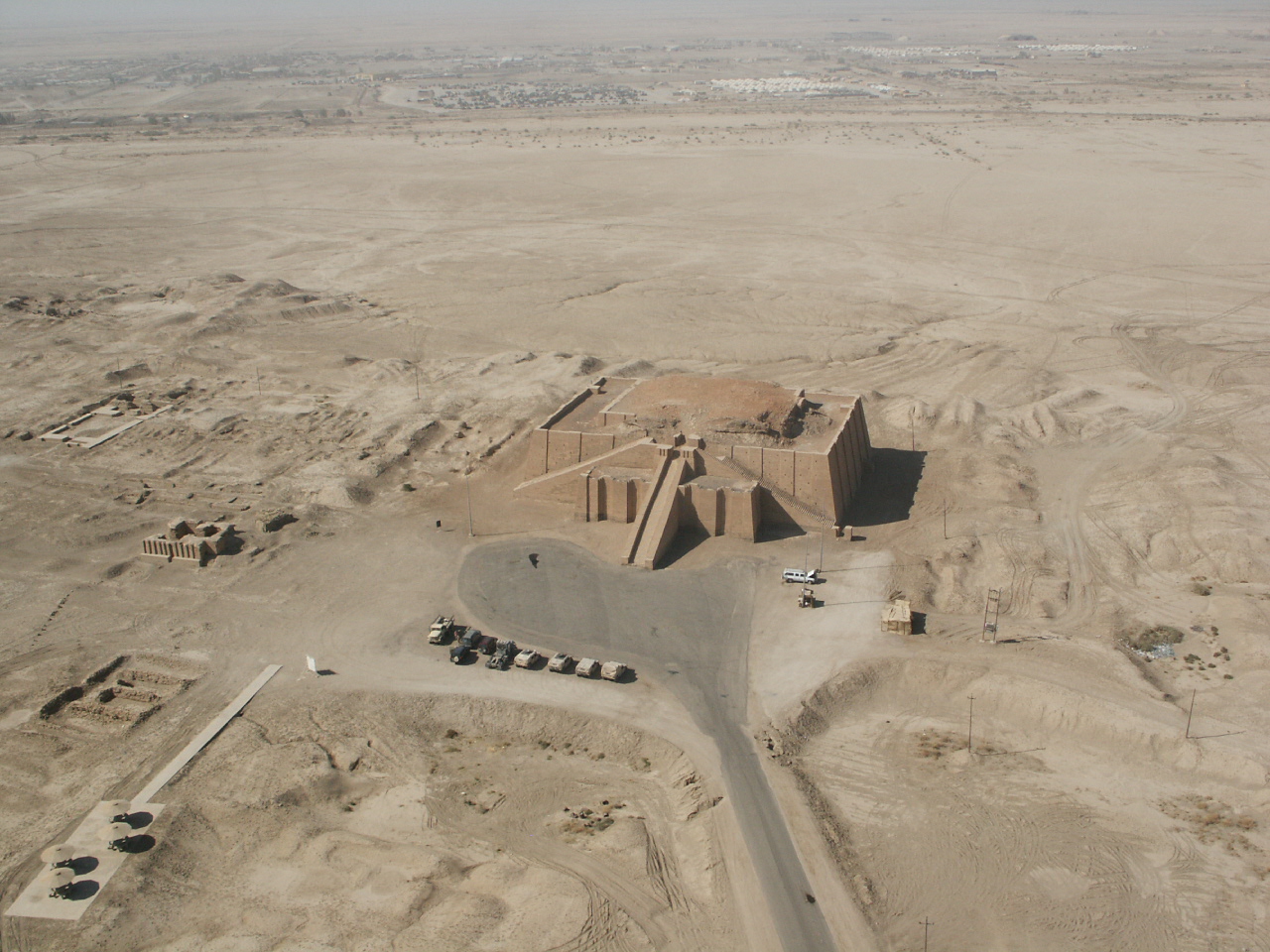
Ur, in the "Fertile" Crescent. It was a little greener 10,000 years ago, but certainly even then there were better places to start civilization. The relationship between city-states and soil fertility is inverted-U-shaped.

Thursday, March 31, 2011

Rand Paul at the Congressional Correspondents Dinner

You gotta love the guy, he actually made a Star Trek reference. Given that he was in D.C., I'm not sure how many people in the room got it.


He's doing a valuable service. We're in a bad spot right now. Democrats are a-okay with being Team America: World Police when it's their guy doing the bombing - and among many, Rachel Maddow's fawning that Obama's "attitude" is what makes the difference is particularly disgusting. I don't think the people dying in what is now our conflict, on either side, particularly care about Obama's attitude. And we hear precious little real opposition from the GOP, who don't dare criticize a war on humanitarian grounds for fear of looking soft.

Of course, one suspicion is that by starting a new war and simultaneously saying he'll encourage new oil drilling inside the U.S. (that's right Democrats, drill baby drill!) Obama is co-opting the GOP's few remaining sane moral and economic points and forcing them further to the fringe. Think how this war will play to the heartland during the 2012 debates when the GOP primary winner tries to call him soft on defense, or says the Democrats are weak on energy. Appointing Jon Huntsman ambassador to China was another move designed to assimiliate possible GOP moderation, and it's still not clear why Huntsman isn't more widely considered a literal Manchurian candidate in the GOP primary field, to torpedo a certain fellow moderate Mormon, and let the evangelicals have their way with the GOP in spring 2012.

The bottom line: the crazier the tea party and social conservatives get, the happier the Obama administration is, and the more rotten (or completely ignored) our discourse and legislative process become. This problem of democracy is not a uniquely American problem. Sarkozy's hair-trigger enthusiasm to bomb someone seems to have been influenced by similar electoral calculations. You're serious about human rights, gentlemen? What about North Korea and Congo and Somalia? I guess human rights must have something to do with oil that we just aren't understanding.

Political strategizing is fine but not when a side effect is using my tax dollars to end human lives.

Wednesday, January 5, 2011

Assorted Links: Transparency and War

1) I Paid a Bribe, a bribe-tracking site with a focus on South India. Has anyone ever estimated the damage that the prevalence of bribes in South Asia does to economies? Also check out the zero rupee note and Transparency International. Future project: multiple regression for happiness indices against factors including transparency (if not already done).

2) Supposedly the 90s were more violent, and the narrative was that the end of the Cold War freed up more national interests to fight without touching off World War III. Turns out violence has decreased steadily since WWII (including in the 90s), and the tail end of Stephen Pinker's observation of a six-century decline is mirrored in this graph. There were however more non-governmental conflicts. This is an interesting development; growth of non-governmental warfare ironically only possible in a wealthier world? There has not been any post-colonial fighting since the 70s, and France was involved in the most international conflicts since WWII. (Really.)

Thursday, June 24, 2010

How Robust Would the Data Cloud Be To Nuclear Attack?

I imagine more stable than if the data were all confined to our individual computers - but are back-ups sufficiently separated, geographically speaking, to minimize disruption by EMP, power interruption, or destruction? Is this a part of operating procedures of major data storage and internet infrastructure companies?